Reference Solutions
Main Installation Methods of FIXED LED Display Screen - Wangs
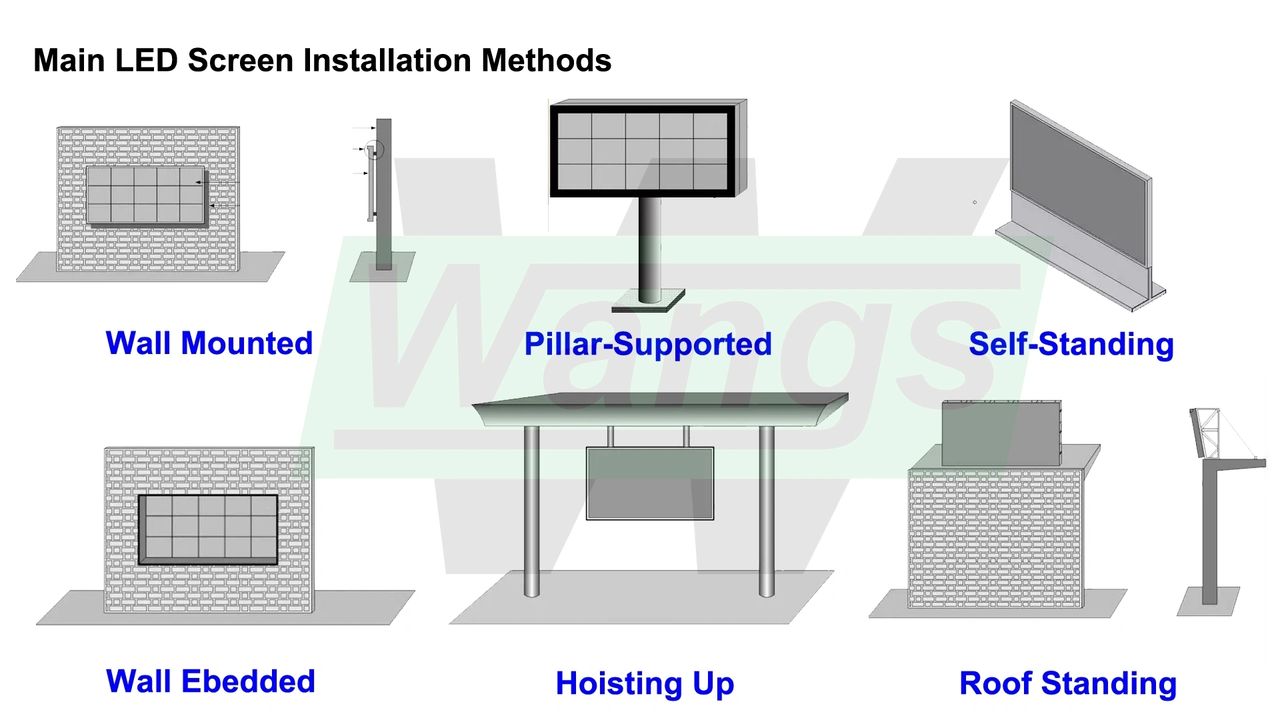
Nowadays, as the LED Display Screen is more and more popular, the installation of LED Display screens also going to be more colorful. This article is mainly tell which installation method should been used for which type of screen for which type of purpose.
Fixed LED screen mainly can been divided in to 2 types, Indoor & Outdoor. They are widly used in Advertising, Meeting & Exhibition Halls, VMS Traffic Signage, Sport Stadiums, etc. This market is around 60% of total value, especially after high value HD Mini technology goes developed.
1. Steel Frame
Steel Frame installation method is the most cheapest installtion method for Indoor LED Screen installation. Only a simpfied frame required,and every components, LED module, Power Supply, Receiving Cards, would been fixed on the frame. The maintenance normally be done from front side, and connections could been more freely.
---The backside should be fully anti-aging, fire-proof & water proof, like concret or metal sheets. Mouse and other small animals also need been worried.
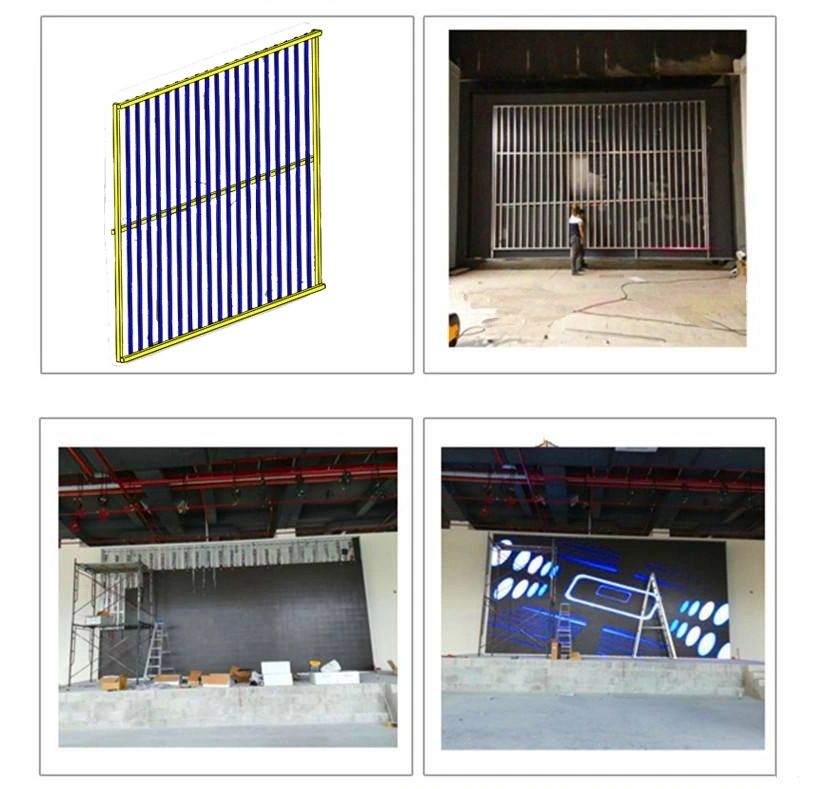
---Most of works need been done on location, after steel frame installed. Power Supply & Cards should been fixed firestly, and every cable should been fixed & connected as the layout drawings. And each pcs of module should been mounted by magnet bolts one by one. Workers should adjust each module carefully to avoid mismatch between pixels and gaps between modules. The installation time and labor costs are around 3 times of most of other methods.
---As there is no cabinets required, the lead time could be around 1 week shorter than other methods which equipped with cabinets.
---This intallation method only can been used for pixel pitch bigger than 2.5mm, and the steel frame flatness should be on a high level.
2. Wall Mounted
Wall Mounted installation can been used for both Indoor & Outdoor LED screens. The cabients are required for this method. The back wall must be solid wall, or extra reinforce support required.
For indoor installation, if the screen size not very big (5~10 Sq.m), and wall flatness is good, cabinets could been directly fixed on the wall by bolts; Or, there should bee reinforce flate back support frame required.
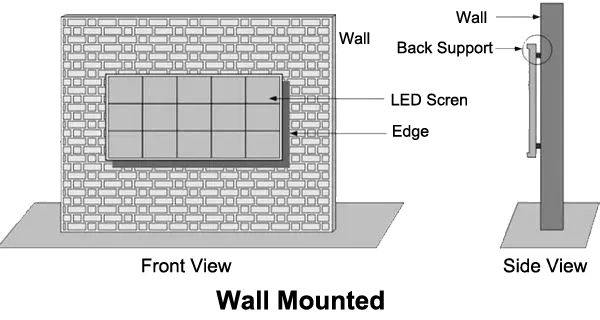
For outdoor installation, if the screen size is small and cabinets could been maintenanced from front side, screens could been mounted on walls directly or with simpfied back frame. But, when it's back side maintenance cabinet, there should be maintenance tunnel (Width. 40~60mm) back of the screen. The installation frame should be strong and well fixed on the wall.
3. Pillar Supported
Pillar Supported installation method is widely used for Traffic VMS systems and Advertising Boards on empty grounds.
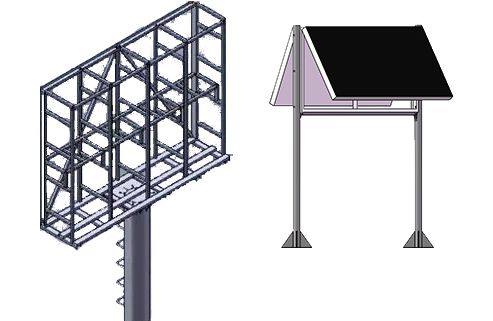
For some small screens which only have 1 cabinet, the pillar could been fixed aside or back of cabinet directly. But for bigger screens, there should also be back support frame required, which same as wall mounted big screens.
The connection between frame and pillar is very easy, but the concret base, pillar size & quantity should been carefully calculated based on local Wind Force, Soil Texture and government requirements.
4. Self-Standing
Self-Standing method normally used for screens installed on empty space and less than 2 meters ground clearance. It could be installed by modules or cabinets, indoor or outdoor.
The standing construction should been strong and steady enough to hold the screen weight, extra reinforce rope or concret base required.
5. Hoisting-Up
Hoisting-Up installated normally using Aluminum Die-Casting cabinet and hoisting bars. When the screen is small, steel cabinets also could been used, but the hoisting weight need been considered.
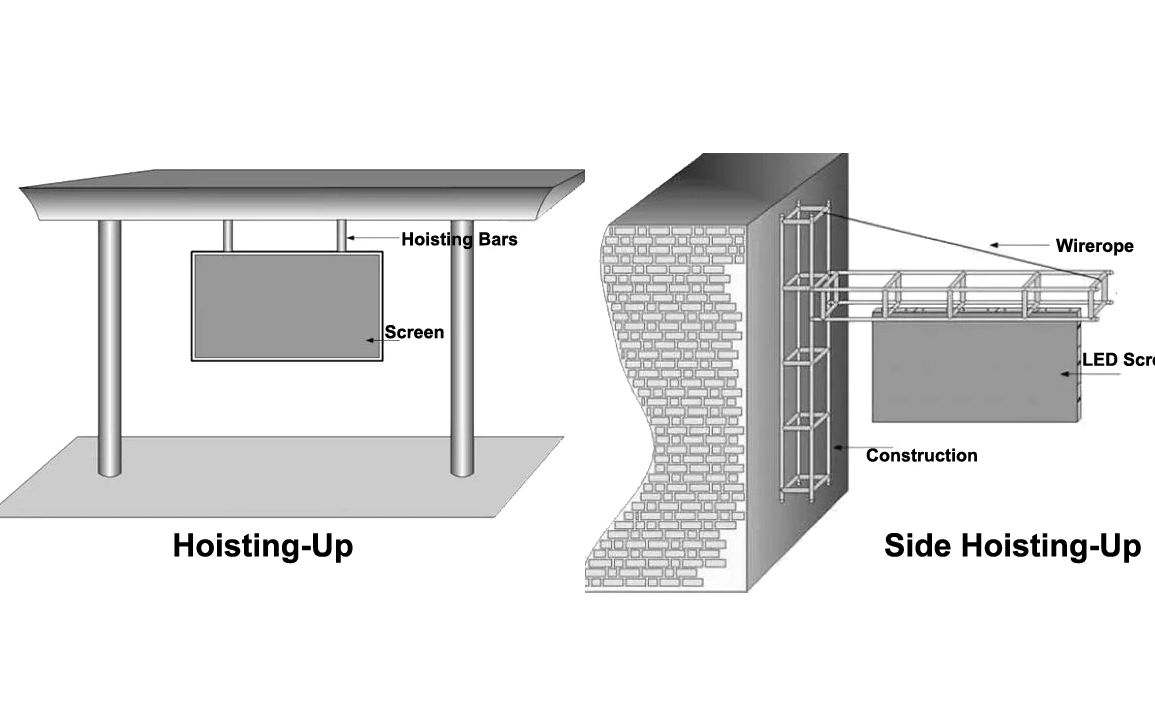
Hoisting-up normally required to use hard connection, especially for outdoor screens, as the air-flow would waved the screen. For some airtight indoor and short distance to roof screens also could use soft wirerope to hoisting the screens.
This method saved back construction and no floor space used, people could watch it in a far distace, espacially suitable for some small signage.
Meanwhile, it also possible for side hoisting, where is not roof, but the strength of holding struction should been designed and built in a high level.
6. Roof Standing
Roof Standing installation normally used for outdoor big advertising board. The installation construction is nearly same as Self-Standing, but it's on the roof, some back reinforce wirerope required to keep it safet.
7. Wall Embedded
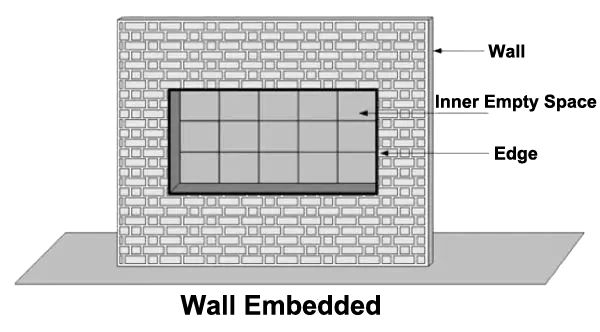
Wall embedded is mostly happened, when the LED Display Screen was been added in to the build
ing design in advance. There should be enough depth space pre-seted at the beginning. (At least 150mm for indoor, and 700mm for outdoor screens.)
The screen would be same level of wall, and the installation would be much easier than other types of method.
Please contact us for more details.
Mr. Wang
+86 157 1014 0336
Your Wants, We Wangs.
Share this post: